
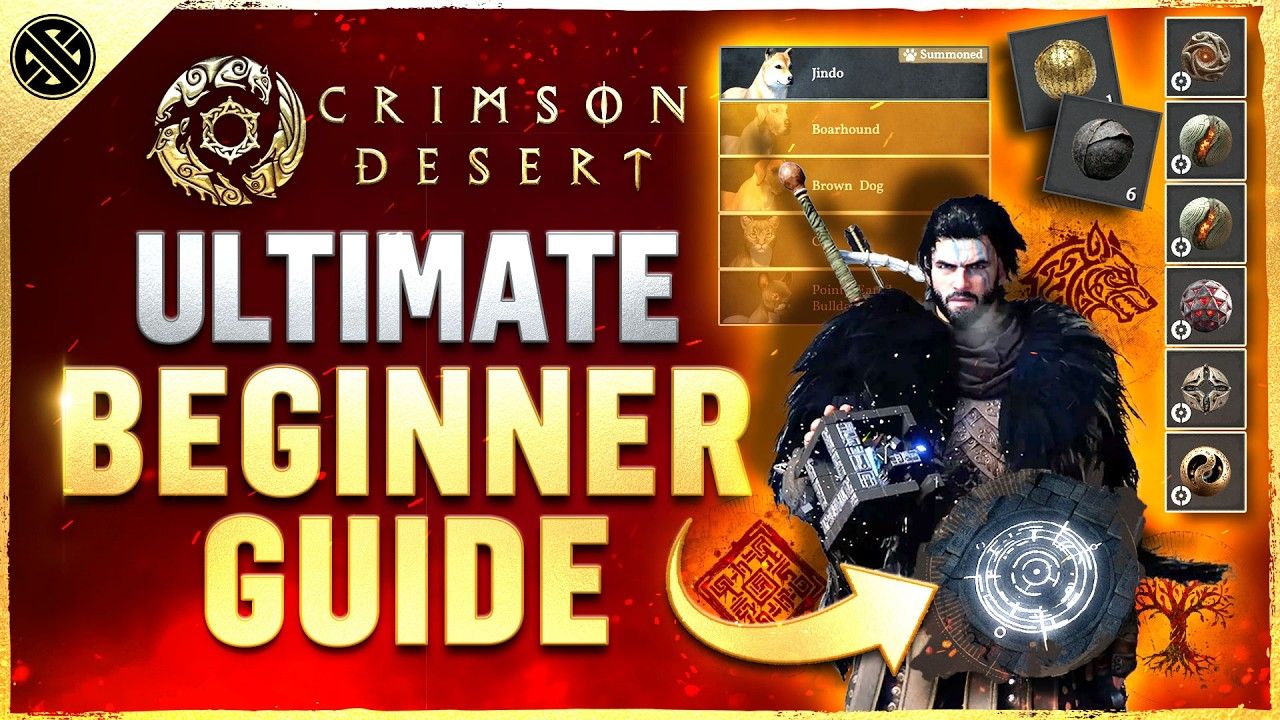
Crimson Desert Beginner’s Guide: Stepping into Crimson Desert for the first time is genuinely overwhelming — and that’s not a criticism. Pearl Abyss has built one of the most ambitious open-world action games in recent memory, and the sheer volume of systems, mechanics, and secrets thrown at you in the opening hours can make even seasoned gamers pause. The continent of Pywel is enormous, the combat is deep, and the game rarely holds your hand long enough to explain everything properly.
That’s exactly why this Crimson Desert beginner’s guide exists. Whether you just picked up the game or you’re a few hours in and feeling lost, we’ve got you covered with everything from combat basics to character progression, inventory management, and exploration secrets. Let’s make sure your first steps in Pywel are confident ones.
Crimson Desert Beginner’s Guide: Quick Overview Table
| Detail | Info |
|---|---|
| Game | Crimson Desert |
| Developer | Pearl Abyss |
| Publisher | Pearl Abyss |
| Release | March 2025 (PC & Console) |
| Platforms | PC, PlayStation 5, Xbox Series X|S |
| Genre | Open-World Action RPG |
| Key Features | Multi-character combat, open world Pywel, Abyss Artifact progression, dynamic difficulty, crafting & professions |
Understanding What Crimson Desert Actually Is
Before anything else, it helps to know what kind of game you’re playing. Crimson Desert is an open-world character action game built around exploration and mastering combat — something like a child of Devil May Cry and Breath of the Wild. It was originally conceived as a spin-off of Black Desert Online but was eventually redesigned into a massive single-player adventure.
Don’t go in expecting a traditional RPG where you grind experience points and watch numbers go up. The game doesn’t give you XP in the conventional sense. Instead, you get Abyss Artifacts and enemy parts that you use to increase your HP, stamina, unlock new skills, and craft weapons and armor. Once that mindset clicks, the whole progression system starts to make sense.
Crimson Deser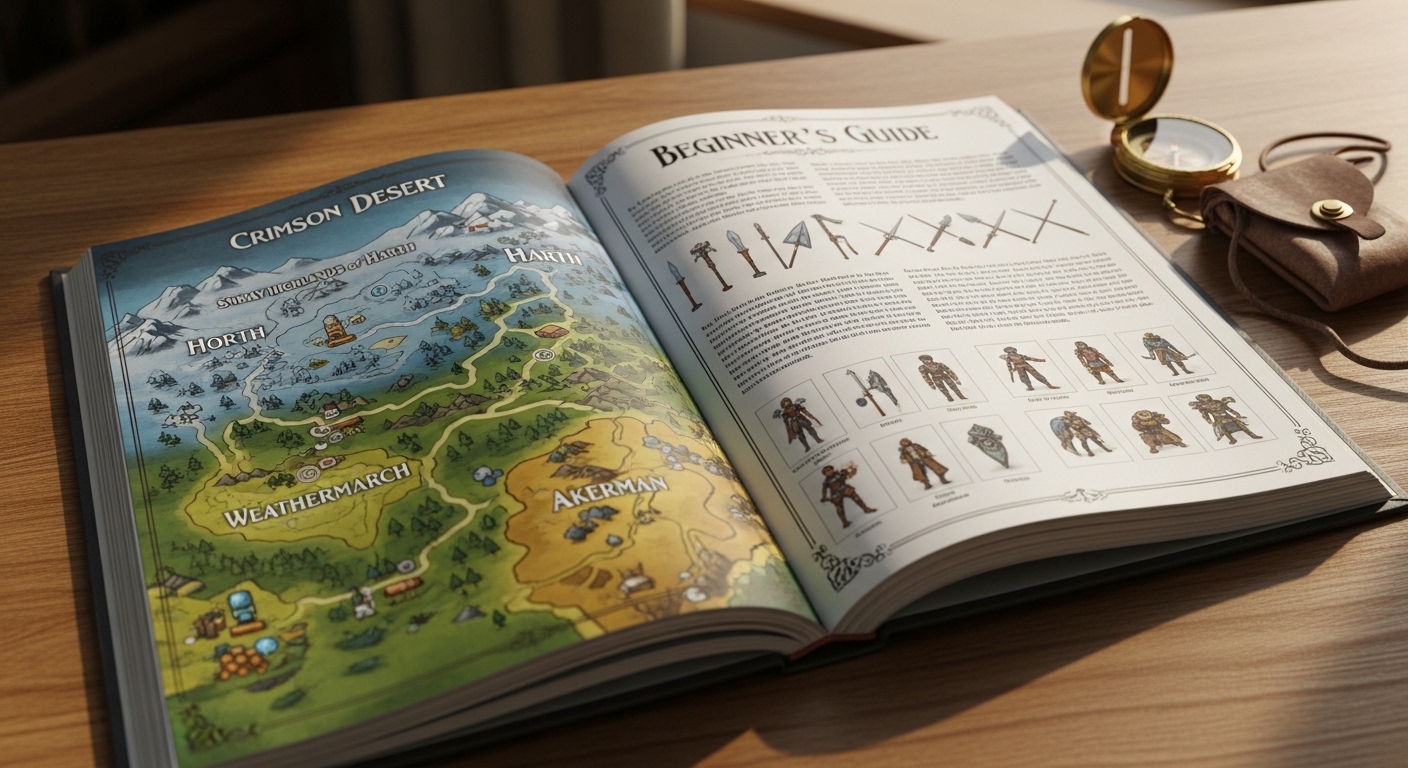 t Story and Characters
Who Is Kliff?
In Crimson Desert, you play as Kliff, a member of the Greymanes — a band of brothers and sisters that has been shattered. Your job is to find the remaining survivors scattered across the world of Pywel.
Kliff is your primary character throughout most of the experience, so get comfortable with his moveset early. The story centers on Kliff as the main lead, but two additional playable characters unlock as you progress through the narrative — Damiane and Oongka — each bringing a completely distinct combat style, their own set of unique skills, and dedicated weapons.
The Additional Characters
What makes this setup exciting is that Damiane and Oongka also come with their own questlines that exist outside the main story. You’re not just switching avatars for variety — you’re unlocking entirely new narrative threads and mechanical playstyles that expand the world of Pywel considerably.
Don’t rush to switch characters early on. Master Kliff’s fundamentals first, then let the others expand your options naturally.
Crimson Desert Combat System Explained
The combat in Crimson Desert looks flashy, but there’s a real system underneath. Learning it properly separates players who struggle from those who breeze through boss fights.
Parrying Is Your Most Important Skill
Parrying is among your most fundamental mechanics. When you successfully block an attack, you automatically restore your Stamina and Spirit, and receive a split second to strike back. Learning to parry as early as possible is essential, especially in boss fights.
Think of parrying less as a defensive tool and more as your primary way to stay in the fight. Every successful parry restores resources and opens counterattack windows.
The “Watch and Learn” System
This is one of the coolest mechanics in the game and one that the game doesn’t explain particularly well. During a battle, your opponent might have a blue highlight while time slows down — this means Kliff is learning a move from that enemy. If it occurs enough times, Kliff will learn the ability permanently without spending an Abyss Artifact. Never spend artifacts on Watch and Learn skills. Let enemies teach you those for free.
The Three Best Early Skills to Unlock
The best three skills to learn early are Nature’s Echo, Quick Swap, and Blinding Flash. Prioritize these before spending Abyss Artifacts on anything else.
Combat Tips You Need to Know
- Use Focus for parrying or to aim your bow shots accurately using Focus Shot. You can hold the attack button to continue attacking — you don’t need to mash buttons to perform combos.
- When surrounded by groups of enemies, roll or evade to the edges and take out archers first. They run to the edges of the battlefield immediately, and removing them lets you focus on melee enemies without stray arrows ending the fight early.
- Don’t ignore the weapon-dropping mechanic. Losing your weapon mid-fight because you weren’t expecting it can turn a manageable encounter into a complete wipe.
Character Progression: Abyss Artifacts Explained
Character progression in Crimson Desert is centered around two aspects: skills and equipment. The game doesn’t feature a traditional leveling system. Instead, you acquire Abyss Artifacts.
What to Spend Artifacts On First
Use your first Abyss Artifacts on Stamina and Health. More stamina means more climbing, more dodging, more gliding — it touches almost every aspect of how you move through the world. Don’t waste early artifacts on gear enhancement. When you hit the point where you need to sacrifice character growth to enhance a single piece of gear, it’s probably time to buy new gear instead.
Sealed Artifacts and Challenges
As you explore Crimson Desert, you’ll stumble upon and collect Sealed Artifacts. To unseal them and extract the Abyss Core — essentially a skill point — locked inside, you need to complete a challenge. You can view all challenges for your currently held Sealed Artifacts by pausing the game, going to the journal section, and checking the subsection titled Challenges.
Open World Exploration: Pywel Is Bigger Than You Think
Follow the Main Story First
This might feel counterintuitive for open-world players, but trust the advice. Some important traversal abilities are locked behind the main storyline — abilities like Focus Palm Force and Flight are essential for exploration, and as far as anyone has found, these can only be learned by completing the main story. Get those abilities before going fully off-road.
Fast Travel Is Rare and Earned
If you’re hoping fast travel works like it does in Diablo IV with travel points in every town, prepare for disappointment. Getting used to running or riding your horse everywhere is a reality for the opening hours.
As you explore the world, you’ll uncover areas clouded out on the map. Hovering over them reveals a hint that something interesting is nearby — about 40% of these secrets turn out to be fast travel points.
Using fast travel too much is also a bad habit. Never exploring the massive land will leave you missing hidden information and useful resources. Some events, like Tavern Rumors and Rescue Missions, are triggered by exploration and can be missed if you’re too dependent on fast travel.
Bell Towers Reveal the Map
In many of the bigger cities and towns in Crimson Desert, you can discover large bell towers. If you climb these and ring the bell, the region around the city will have its fog of war removed — similar to how climbing towers in Assassin’s Creed reveals sections of the map.
Traversal and Movement Skills
Getting around Pywel uses a layered movement system. Mounts and steeds handle long-distance travel efficiently.
You can also go to Abyss Island teleport spots far above Pywel and use gliding to cover more ground quickly — this works even better the more stamina you have. Combining a double jump with Force Palm (up to three uses) while in the air lets you reach considerable heights, making it easy to access elevated areas or glide to new ones.
Inventory Management: Don’t Ignore This
Inventory management is a bit of a nightmare in Crimson Desert. There are currently no storage or stash spaces in the game, which means everything you want to keep needs to be carried on your person at all times. You earn inventory space by completing quests in each region.
Most merchants sell a cheap bag that will expand your inventory space by one slot. It doesn’t seem like much, but in the early hours, you can easily increase your inventory by a dozen slots if you visit every shopkeeper you encounter.
Don’t forget to check the Supply Chest behind Rory in the camp. Once unlocked by completing Greymane quests, this is where all the loot you leave behind at points of interest will be stored.
Weapons, Gear, and Crafting
Best Early Game Weapons
The best weapons for the early game are Tauria’s Curved Sword and the Sword of the Lord, which can be looted from the Crowcaller and Kailok bosses respectively. Boss loot is almost always better than anything you can buy from vendors in the early hours.
Crafting Is Not Optional
Crafted weapons provide bonuses to core stats and can enhance your skills and abilities in ways that standard loot doesn’t always replicate. Against multi-phase bosses and elite enemies, the difference between upgraded and unupgraded gear is substantial.
Buy a pickaxe and an axe as soon as possible — they allow you to farm ore and wood, both of which are needed for gear upgrades.
Professions, Cooking, and Survival
Crimson Desert isn’t just about combat. There’s an entire layer of professions that feeds directly into how strong you are.
You can cook, fish, skin animals, hunt, mine, and become a woodcutter. Each mechanic isn’t there just for variety — they all do something meaningful. Cooking in particular buffs your stats, which is genuinely helpful before boss fights.
Meals you prepare yourself give buffs to health, stamina regeneration, and Spirit. This makes home-cooked food a better option than standard potions.
In the early hours, stock up on lots of cooked meat to use as healing items during harder fights and boss encounters. When you see groups of animals, use your powerful special attack to take out multiple deer and goats quickly, then cook the meat at any fire with a pot.
Boss Fights: What You Need to Know
Boss encounters in Crimson Desert follow a structured phase system. You’ll spot a boss health bar at the top-center of the screen when a major fight begins. When you drain the first bar, a cutscene triggers, the health resets, and the fight escalates.
Boss fights really test how much of the game’s mechanics players know. They require planning, analyzing moves, and dodging or parrying accordingly.
Craft Palmar Pills before going into tough fights. You can craft Palmar Pills with basic alchemy materials — like water and any insects or plants you harvest — and they allow you to revive with 30% of your HP. During tricky fights, these revives can save a lot of time and prevent you from resetting over and over.
Hidden Mechanics and Secrets
These are things the game doesn’t explain properly, but knowing them early makes a huge difference.
- Lightning and rain aren’t just visual effects — they have real gameplay impacts. Wearing metal gear in a storm can get you struck by lightning. Switch to leather gear in bad weather to stay protected.
- You must use the Stab skill (R1/RB + Triangle/Y) to access the hidden area behind waterfalls. Waterfalls with hidden areas are often marked by a stack of rocks outside them.
- When your lantern glows with a blue light while on your hip, use it to reveal memories, which automatically equips the Visionie.
- If a door is locked and you don’t have a key, look for a window to enter instead. To avoid automatically using keys, approach a door with your lantern out, which gives you the option to use a key if you actually want to.
- You can use Force Palm after jumping — pressing the button up to three times causes Kliff to gain a triple-boosted jump, which is also useful for reaching higher terrain.
Reputation and Side Quests Matter
One of the most important things to remember is to keep doing side quests and commissions. Almost everything you do that improves a community also increases your contribution rank — your reputation. Higher contribution levels allow you to purchase unique goodies from regional vendors, including thematic weapons, armor, and horse barding.
Most factions in Pywel start as friendly and funnel you toward side quests that flesh out the world’s politics and history. Hostile factions actively occupy territories and need to be cleared before those areas become safe.
Pros and Cons for New Players
| Pros | Cons |
|---|---|
| Deep, rewarding combat system | Steep learning curve at the start |
| Enormous and visually stunning open world | Inventory management is frustrating early on |
| Three distinct playable characters | Fast travel is limited and hard to find |
| Unique Watch and Learn skill system | Some mechanics are barely explained |
| Dynamic Difficulty Scaling | Combat can feel overwhelming in large groups |
| Rich crafting and profession systems | Early story pacing can be slow |
Expert Opinion
Crimson Desert is a game that punishes impatience and rewards curiosity. The players who bounce off it early are often those who tried to force their way through combat without learning the parry system, or who rushed past every town without talking to merchants and picking up side quests. The players who fall in love with it are those who slow down, explore every cloudy corner of the map, and let Pywel reveal itself at its own pace. It’s not a perfect game, but it’s an ambitious one — and with the right foundation, it’s one of the most rewarding open-world experiences in years.
Frequently Asked Questions (FAQs)
Q1: What is Crimson Desert and who is the main character? Crimson Desert is an open-world action RPG developed by Pearl Abyss. You play primarily as Kliff, a mercenary from the Greymanes faction. As the story progresses, two additional playable characters — Damiane and Oongka — become available, each with their own combat styles and questlines.
Q2: How does character progression work in Crimson Desert? Crimson Desert doesn’t use a traditional XP leveling system. Instead, you collect Abyss Artifacts through exploration and combat. These are used to upgrade your health, stamina, and unlock new skills. Spend your first artifacts on Stamina and Health to build a solid foundation.
Q3: What are the best skills to unlock first in Crimson Desert? The three best early skills to prioritize are Nature’s Echo, Quick Swap, and Blinding Flash. Additionally, never spend Abyss Artifacts on Watch and Learn skills — let enemies teach you those for free during combat by triggering the blue-highlight learning mechanic.
Q4: How does fast travel work in Crimson Desert? Fast travel points are rare and hidden throughout the world of Pywel. You unlock them by discovering specific locations marked on your map with cloudy overlays. Relying too much on fast travel can cause you to miss events like Tavern Rumors and Rescue Missions, which are triggered by exploration.
Q5: What should I know about combat before starting Crimson Desert? Parrying is the most critical combat mechanic — it restores Stamina and Spirit while creating counterattack windows. Hold the attack button rather than mashing it. Take out archers first in group fights, and learn the phase structure of boss encounters before engaging them.
Q6: Does weather affect gameplay in Crimson Desert? Yes, significantly. Wearing metal armor during lightning storms can result in being struck by lightning. Switching to leather gear during bad weather is a genuinely important survival tip that the game doesn’t explain clearly. Weather is a real gameplay system, not just visual decoration.
Q7: How do I manage inventory in Crimson Desert? There is no shared stash in the game, so everything must be carried on you. Expand inventory by completing regional commission quests, buying cheap bags from every merchant you meet, and unlocking the Supply Chest in the Greymane Camp after completing camp quests.
Q8: Is Crimson Desert hard for beginners? It has a steep learning curve but isn’t unfairly difficult once you understand the systems. Focus on learning parry timing, spending Abyss Artifacts wisely, and following the main story to unlock essential traversal abilities early. The game rewards patience and exploration rather than brute force.

Surya Gupta is a professional blogger and SEO specialist with over five years of experience in digital content creation. He writes about technology, smartphones, games, trading, and trending topics. Through his websites, he aims to provide clear, accurate, and helpful information to readers.