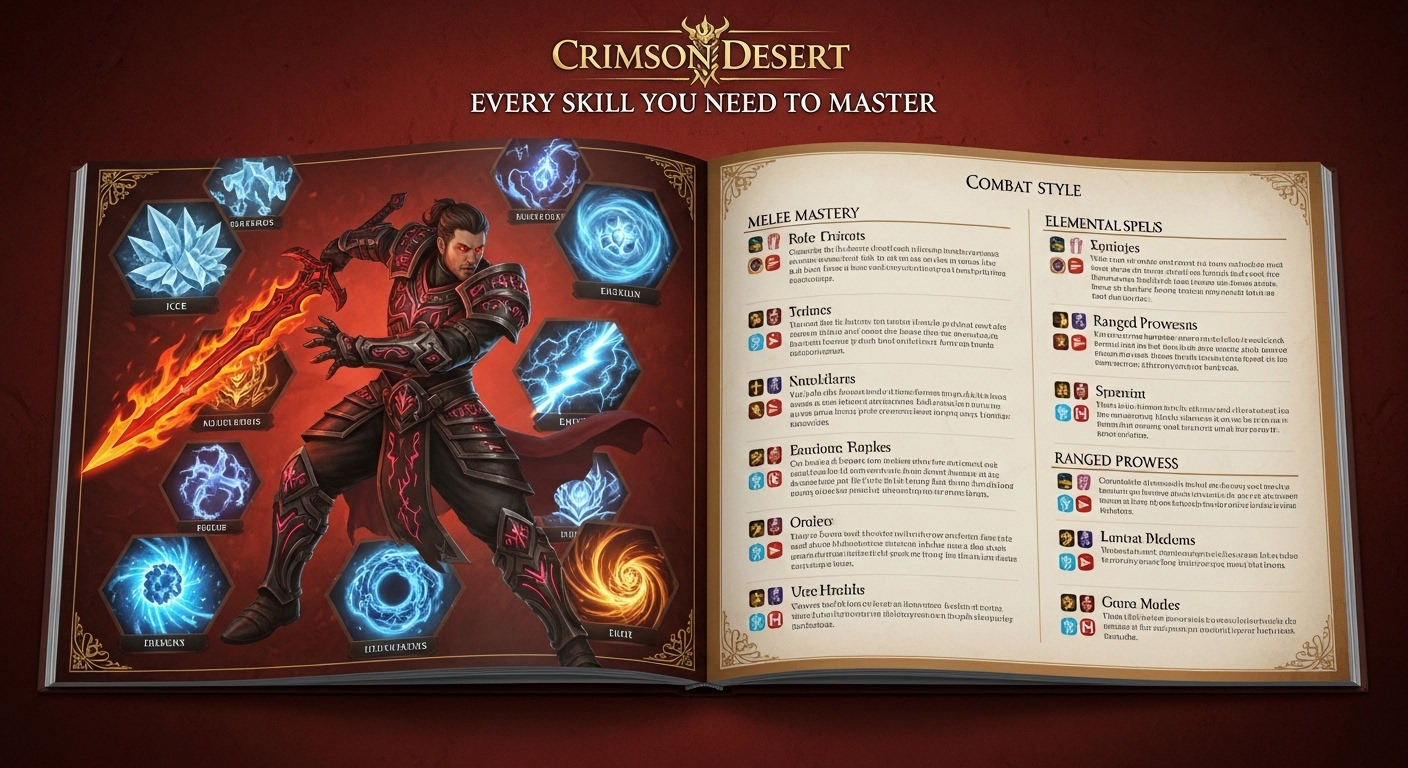
Crimson Desert Abilities Guide: If you have been wondering how to build Kliff into an unstoppable force in Crimson Desert, the answer lives entirely inside the Abyss skill tree. This is not a game where you grind experience points and watch a number go up. Pearl Abyss designed something more deliberate — every ability you unlock has to be earned, either by spending Abyss Artifacts you find in the world or by watching enemies mid-fight and absorbing their techniques for free. The result is a skill system that rewards players who pay attention and punishes those who spend points carelessly.
With three playable characters, dozens of active abilities, and a Watch and Learn mechanic that most players miss entirely, Crimson Desert abilities go far deeper than they first appear. This guide breaks down every major system — from the three skill tree branches to the best early-game investments — so you can focus on playing instead of backtracking.
Crimson Desert Abilities Guide: Quick Overview
| Category | Details |
|---|---|
| Game Title | Crimson Desert |
| Developer / Publisher | Pearl Abyss |
| Release Date | March 19, 2026 |
| Platforms | PC (Steam), PlayStation 5, Xbox Series X/S, macOS |
| Genre | Open-World Action-Adventure RPG |
| Protagonist | Kliff Macduff (+ Damiane & Oongka) |
| Skill Currency | Abyss Artifacts |
| Key Ability System | Abyss Skill Tree (3 branches: Red, Blue, Green) |
| Game Engine | BlackSpace Engine (Pearl Abyss proprietary) |
How the Crimson Desert Abilities System Works
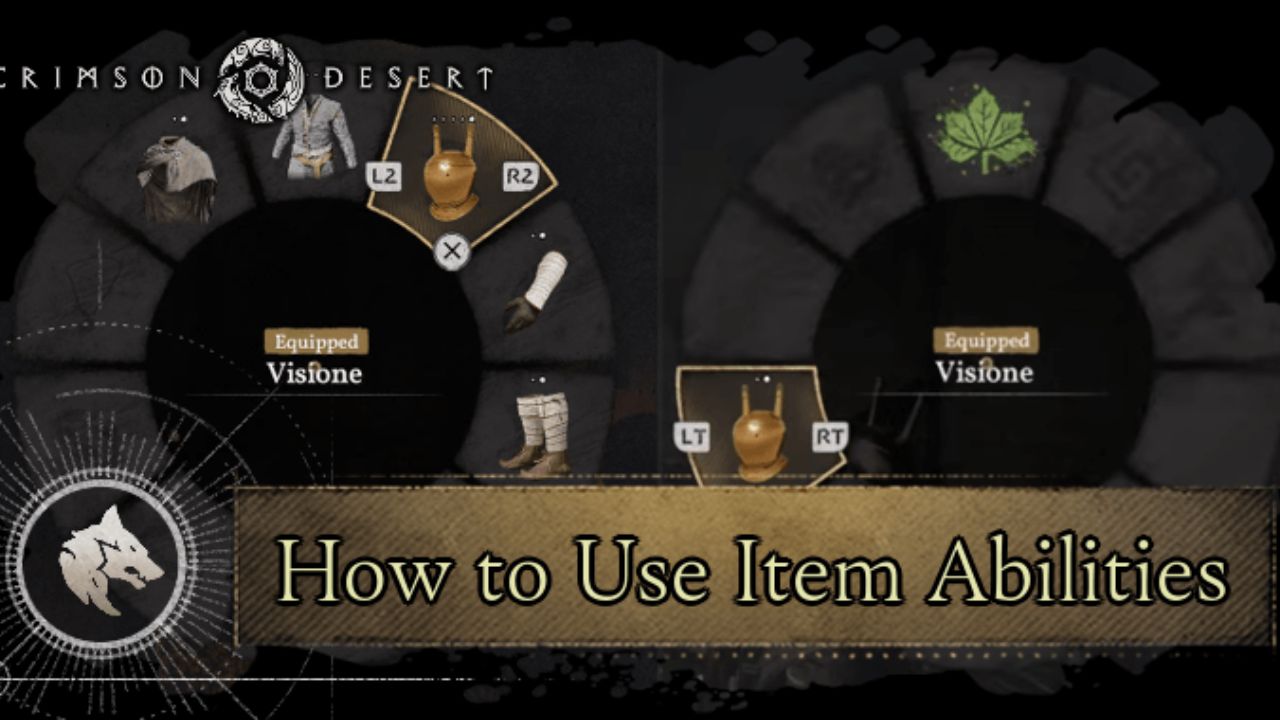
Before you spend a single Abyss Artifact, you need to understand what you are actually investing in. Crimson Desert replaces the traditional experience-and-level-up loop with a collectible currency system built around Abyss Artifacts. You earn them by killing enemies, completing quests, clearing Abyss puzzles, and exploring the open world of Pywel. Each artifact acts as a skill point that you can drop into any node on the Abyss Skill Tree.
The Three Skill Tree Branches
The Abyss Skill Tree is split into three color-coded branches, each governing a different side of Kliff’s growth. Understanding what each branch covers is the difference between a build that works and one that leaves you overwhelmed mid-fight.
- Red Branch (Health): Controls your maximum health pool and unlocks mobility skills, aerial abilities, and flight-related movement. Goes up to level 18 in terms of core stat investment.
- Blue Branch (Stamina / Endurance): This is where the majority of Kliff’s direct combat power sits. Armed Combat, dodge chains, unarmed strikes, and ranged Marksmanship all live here. Goes up to level 16.
- Green Branch (Spirit / Mind): Houses spirit-based skills including Force Palm, Nature’s Snare, Nature’s Echo, and counter-attack abilities. Spirit regenerates faster during Focus mode, making this branch especially valuable once you learn how to chain those moments together.
All three branches eventually converge at the center of the tree at a single ultimate skill called Falling Palm. Reaching it requires meaningful investment across all three paths, so treating the tree as fully linear will slow your progress significantly.
Core Nodes vs Branch Nodes
The skill tree contains two distinct types of nodes. Core nodes increase your raw stats — Health, Stamina, or Spirit — and act as the spine that unlocks deeper abilities. Branch nodes are the actual techniques: active moves, passive upgrades, and elemental enhancements. You need to push the core stat far enough in any given branch before the game will let you access the higher-tier branch nodes hidden inside it.
One detail worth noting: each of the three playable characters has a completely independent skill tree. Upgrades you invest in Kliff’s abilities do not carry over to Damiane or Oongka. You will need to manage Abyss Artifact spending across all three if you want each character performing at their best.
The Watch and Learn Mechanic: Free Abilities You Cannot Afford to Miss
One of the most underused systems in Crimson Desert is the Watch and Learn mechanic, and it can save you a significant number of Abyss Artifacts over the course of a full playthrough. When Kliff observes an enemy, NPC, or spirit hologram performing a unique move, time slows down and a progress bar appears on screen. Hold your position, keep your camera on the source, and fill the bar completely. If you succeed, Kliff permanently learns that ability at no cost whatsoever.
How to Observe Without Losing Progress
- Kill all other enemies in the area first before watching a specific target. This lets you focus on one enemy without taking damage from the group.
- Do not turn your camera away. The progress bar pauses the moment Kliff loses line of sight to the source performing the skill.
- If you take a hit, the progress bar resets for that repetition. Staying mobile and maintaining distance is more important than getting in attacks during observation.
- Peaceful NPCs and spirit holograms near Abyss Cressets can also teach abilities. Walk up, hold the Observe button, and wait roughly two seconds per observation.
- If you already spent an Abyss Artifact on a skill before observing it in the wild, the spent artifact is automatically refunded once the Watch and Learn bar fills.
Evasive Roll is one of the strongest early survivability tools in the game, and it is obtainable completely free during the Hornsplitter boss fight in Chapter 2. Pump Kick, on the other hand, can only be learned by observing Matthias during his Chapter 1 encounter — it cannot be purchased at all. Missing that window means losing access to a useful stagger tool until a much later point in the campaign.
Best Crimson Desert Abilities to Unlock First
With a skill tree this size, early investment decisions matter more than people realize. Spending Abyss Artifacts on the wrong nodes early means fighting bosses with a half-built kit. These are the abilities that make the biggest difference before you reach mid-game.
| Skill Name | What It Does | Priority |
|---|---|---|
| Keen Senses (Lv.3) | Unlocks the Dodge ability — the single most important survivability tool in the game. Without Dodge, you are absorbing hits that should be avoidable. | Essential |
| Evasive Roll | Keeps Kliff mobile even after absorbing damage. Free via Watch & Learn in Chapter 2 during the Hornsplitter fight. | Essential |
| Focus (Lv.3) | Slows time, regenerates spirit, and at level 3 adds Focused Insight — an instant parry on any incoming melee strike while Focus is active. | Essential |
| Armed Combat (Lv.1–5) | Core of Kliff’s weapon damage. Each level unlocks new combat moves: backward strike, shield dash, forward dodge counter, weapon-swap attacks. | High |
| Blinding Flash Finisher | Your best early crowd control option. Clears space around Kliff quickly when surrounded by grouped enemies. | High |
| Force Palm / Aerial Force Palm | Primarily a traversal tool but repositions enemies in combat. Aerial Force Palm activates up to three times mid-air. | High |
| Axiom Force (Lv.3) | Starts as a puzzle tool. At level 3 becomes a grappling hook that flings Kliff across large distances at speed. | High |
| Focused Shot (Lv.3) | Slows time while aiming, marks multiple targets, then releases a Charged Shot at each marked enemy simultaneously. | Medium |
| Nature’s Snare (Lv.3) | Creates a barrier absorbing incoming projectiles and spells, then discharges them as a focused shot. | Medium |
Abyss Abilities: The Supernatural Side of Kliff’s Skill Set
Beyond the combat-focused skill tree, Kliff gains a separate category of powers tied directly to the Abyss — the mysterious floating realm above Pywel. These abilities are not purchased through the standard Abyss Artifact system. They are earned through story progression and Abyss exploration, and they fundamentally change how you move through and interact with the world.
Axiom Force
The first major Abyss ability most players encounter, Axiom Force begins as a tool for rotating puzzle pieces and manipulating specific objects. At this stage it feels minor, almost incidental. But the further you invest in it, the more it transforms. At higher levels, Axiom Force becomes a proper grappling hook that does not simply pull Kliff toward a surface — it slingshots him into the air, allowing you to transition directly into gliding or use the momentum to cover significant horizontal distance. Fully upgraded Axiom Force turns into fling travel that sends Kliff spinning across the map at speed — a traversal upgrade that rivals dedicated movement systems in other open-world games.
Object Manipulation and World Interaction
The Abyss also gives Kliff abilities that make the environment a tool rather than a barrier. Making objects weightless lets you shift obstacles that would otherwise block your path. Lifting heavy items opens up routes that appear completely sealed off on first inspection. These abilities also factor into the game’s puzzle sequences, many of which are designed specifically around the Abyss manipulation toolkit rather than traditional inventory solutions.
Glider
The glider is unlocked early through Abyss progression and is arguably one of the most impactful movement tools in the entire game. It allows Kliff to safely drop from great heights, cross gaps that would otherwise require long detours, and chain with Axiom Force to cover large sections of the map without a mount. Combined with the Aerial Force Palm skill from the Green Branch, vertical movement in Crimson Desert becomes genuinely expressive rather than just functional.
Abilities by Character: Kliff, Damiane, and Oongka
Each of the three playable characters uses the same Abyss Artifact currency but runs an entirely separate skill tree. Their individual ability sets reflect distinct combat philosophies, and switching between them without understanding those differences leads to wasted resources.
Kliff Macduff — Versatile Generalist
Kliff has the most expansive skill tree in the game with over 80 learnable skills. He can be built as a sword-and-shield defensive fighter, a bare-handed brawler, a spear-wielding Spirit-focused crowd controller, or a mobile archer. His unarmed skill set is a hidden strength — bare-handed attacks actually deal more stagger damage than weapon hits, which is particularly effective against bosses with high poise.
- Abyssal Knight: Longsword and shield. Defensive and sustainable, well-suited for Abyss exploration and extended boss encounters.
- Grey Druid: Spear with Axiom Bracelet. Emphasizes reach and Spirit-powered attacks, ideal for crowd control.
- Iron Fist Monk: Unarmed combat with Axiom Bracelet. High-mobility and aggressive, leans heavily on Blue Branch unarmed bonuses.
- Wrestler / Grapple Master: Focused on throws, Lariat, Body Slam, and Clothesline to continuously disrupt enemy positioning.
Damiane — Aggressive Combo Fighter
Damiane plays significantly faster than Kliff. Her kit revolves around chained blade combos, a bouncing shield toss that can hit multiple enemies in one throw, and a firearm for range management. She also uses an umbrella-turned-propeller to glide. The important caveat: Damiane rewards players who have already internalized dodge timing from other action games. Her sword flurry demands precise inputs, and managing the firearm alongside melee adds positioning complexity that can overwhelm newer players.
Oongka — Brute Force Damage Dealer
Oongka is built for players who want maximum damage without the precision tax. Dual-wielding massive weapons and leaning on area-of-effect abilities, Oongka has the highest raw damage ceiling of the three characters on the Great Axe. He also has the most natural survivability in endgame, making him the recommended choice for players who find Damiane’s technical demands frustrating.
Elemental Enhancements and Imbue Element
Crimson Desert abilities extend beyond physical attacks through an elemental enhancement system. Once Kliff unlocks either Flame, Ice, or Thunder at Level 1 through Abyss region exploration, he gains access to Imbue Element — a passive skill that gradually applies elemental properties to existing attacks. The elements integrate directly into combo chains and weapon strikes rather than functioning as a separate magic system.
- Flame: Adds a burning effect to strikes and can be used to boost aerial momentum in certain scenarios.
- Ice: Useful for slowing enemy movement and adding crowd control during grouped encounters.
- Thunder: Effective against heavily armored targets where physical damage alone struggles to create stagger windows.
Alchemy further extends this system — Kliff can apply alchemical properties to weapons, creating combinations that go beyond the base elemental toolkit and become especially valuable in mid to late game boss fights.
Beginner Tips for Building Your Ability Set
Prioritize Stats Before Fancy Skills
Before chasing the abilities that look exciting in trailers, make sure Kliff’s core stats are healthy. Having powerful skills means nothing if he drops in two hits because Health and Stamina are still at starting values. Invest in core stat nodes alongside ability nodes rather than racing toward a specific move.
Do Not Ignore Watch and Learn Opportunities
Every boss and elite enemy you encounter is potentially offering you a free skill. Slow-rolling a boss encounter to fill the Watch and Learn bar before killing it is almost always worth the extra time. The Hornsplitter fight in Chapter 2 for Evasive Roll and the Matthias fight in Chapter 1 for Pump Kick are non-negotiable observations. Do not rush through these fights without looking for the slow-down prompt.
Respec Is Available but Not Free
Crimson Desert allows skill respecs through a rare item called the Faded Abyss Artifact. You can reset your tree and recover every spent point, but these items are not common enough to respec casually. Treat each major spend decision seriously, especially in the first three chapters before the artifact supply opens up.
Build Axiom Force Early for Exploration
Even if you are primarily focused on combat, investing in Axiom Force early pays dividends during exploration. The ability to reach elevated areas, slingshot across gaps, and chain into gliding makes a massive portion of Pywel accessible without needing to find the appropriate quest trigger first. Missing collectibles and Abyss Artifacts in hard-to-reach spots is one of the main reasons players feel resource-starved in mid-game.
Crimson Desert Skill System: Pros and Cons
| Strengths | Weaknesses |
|---|---|
| Watch and Learn rewards attention during fights | Over 80 skills can feel overwhelming for new players |
| Three distinct characters with separate trees add replay value | Separate skill trees mean significant grinding per character |
| Abyss abilities genuinely change traversal and combat depth | Some missable skills (e.g. Pump Kick) cannot be recovered later |
| Respec system exists so experimentation is always possible | Faded Abyss Artifacts for respec are rare in early chapters |
| Elemental imbues integrate naturally into existing combos | Stat investment required before combat skills become available |
| Builds feel meaningfully different based on investment path | Bosses can punish under-invested builds with little warning |
Expert Opinion
What sets the Crimson Desert ability system apart from most open-world RPGs is the deliberate tension between spend and observe. The Watch and Learn mechanic is one of the better implementations of skill acquisition through gameplay context I have seen — it rewards players who understand pacing rather than rushing. The three skill branches covering Health, Stamina, and Spirit create genuine build identity without locking players into rigid class paths. The main friction point is early resource scarcity, which makes the first few chapters feel more restrictive than they should. Once the Abyss Artifact supply opens up in mid-game, the system clicks into place. The advice I would give every player: resist the urge to spend your first dozen artifacts on what looks impressive. Keen Senses, Armed Combat, and Force Palm are unglamorous investments that quietly make everything else in the game work better.
Frequently Asked Questions (FAQs)
What are Abyss Artifacts in Crimson Desert and how do I get them? Abyss Artifacts are the game’s skill point currency, replacing traditional experience levels. You earn them by defeating enemies, completing quests, solving Abyss puzzles, exploring the open world of Pywel, and clearing ruins. A progress bar near the minimap tracks your advancement toward each new artifact.
How does the Watch and Learn mechanic work in Crimson Desert? When Kliff observes an enemy or NPC performing a unique move during combat, time slows and a progress bar appears. Keep your camera on the source, avoid taking damage, and fill the bar completely to permanently learn that skill without spending any Abyss Artifacts.
What is the best early Crimson Desert ability to unlock first? Keen Senses at level 3 is the single most important early investment because it unlocks the Dodge ability — the core survivability tool for the entire game. Without it, fights against bosses and elite enemies become significantly harder than they need to be.
Can you respec skills in Crimson Desert? Yes. A rare item called the Faded Abyss Artifact allows you to fully reset your skill tree and recover every spent point. These items come from quest completions, exploration, and vendors, but they are not common enough in the early game to respec casually or frequently.
What is the Axiom Force ability in Crimson Desert? Axiom Force is Kliff’s primary Abyss-derived traversal tool. It starts as a puzzle mechanic for manipulating weightless objects, then evolves at higher levels into a grappling hook that slingshots Kliff into the air and across large map distances at speed.
Are Crimson Desert abilities shared between Kliff, Damiane, and Oongka? Core combat fundamentals like parrying and dodging are shared across all three characters. However, each character has a fully independent skill tree. Abyss Artifacts spent upgrading Kliff’s abilities do not carry over to Damiane or Oongka, and their unique skills must be unlocked separately.
What is the Spirit stat used for in Crimson Desert? Spirit powers active abilities including Force Palm, Nature’s Snare, and Blinding Flash Finisher. It regenerates more quickly while Kliff is in Focus mode, which is why investing in the Focus skill early has strong synergy with any Spirit-heavy build.
Can you miss permanent abilities in Crimson Desert? Yes. Pump Kick, for example, can only be learned by observing Matthias during his Chapter 1 boss fight. It cannot be purchased through the skill menu at any point. Missing this and other Watch and Learn exclusive moves means losing access to them for the rest of that playthrough.

Surya Gupta is a professional blogger and SEO specialist with over five years of experience in digital content creation. He writes about technology, smartphones, games, trading, and trending topics. Through his websites, he aims to provide clear, accurate, and helpful information to readers.